Tao Te Ching Best Translation: Side-by-Side Chapter Comparison & Guide
No single English version is best for everyone. Read one chapter in Chinese and in translation, see what each translator chose, then pick the book that fits how you read.

For an easy first read, start with Stephen Mitchell's version (1988) or Ursula K. Le Guin's (1997). Neither poet reads classical Chinese. Both built their English from earlier translations and word-by-word glosses, so their books are interpretations.
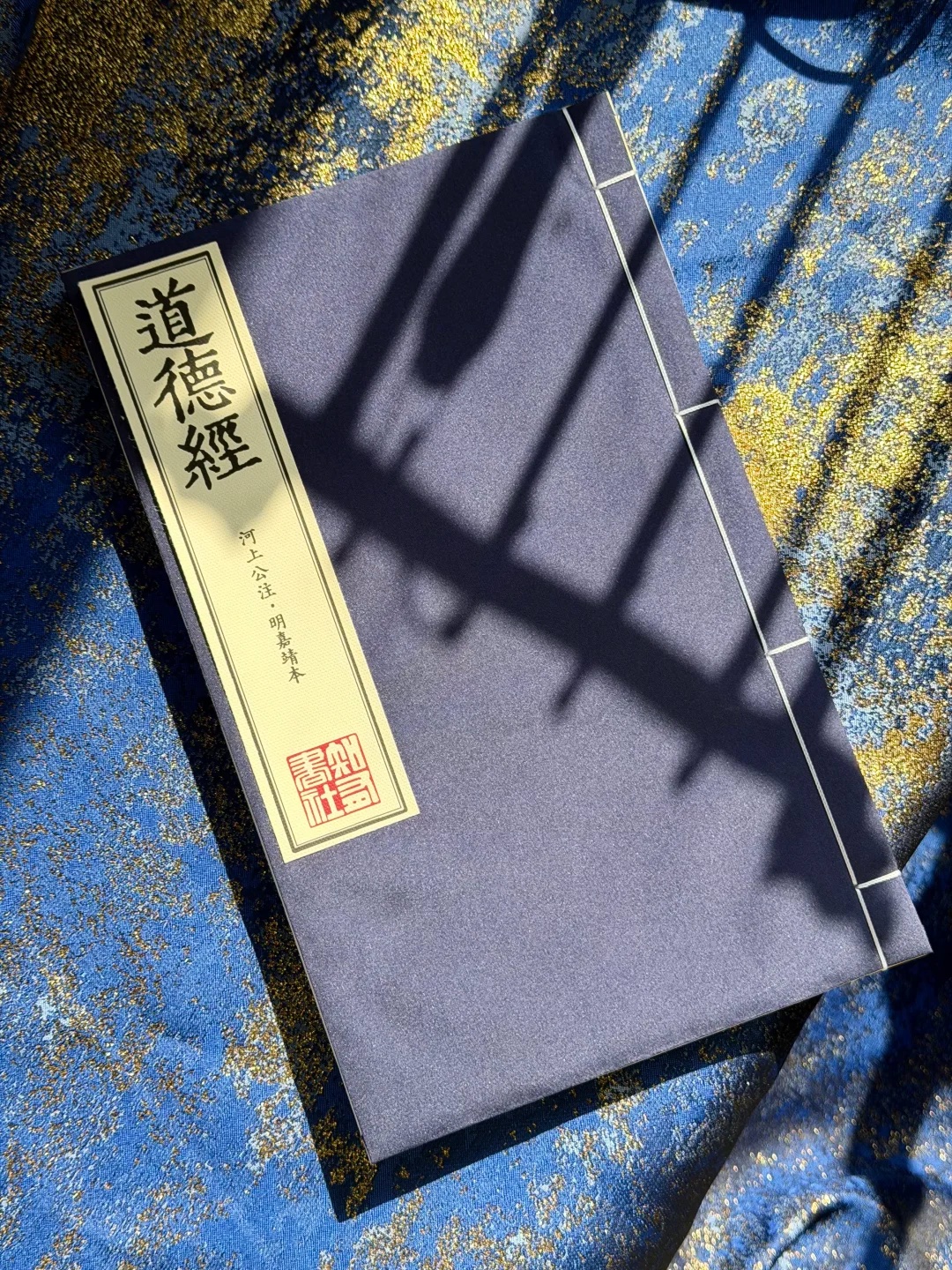
If you want to know what the Chinese says, choose a translation made from the Chinese, such as Red Pine's (1996, revised 2009) or Stephen Addiss and Stanley Lombardo's (1993). James Legge's translation of 1891 is free and in the public domain, which is why this site quotes it, but his Victorian phrasing and bracketed additions take some getting used to.
Side-by-side Tao Te Ching translation reader
Choose any of the 81 chapters. The first column is the Chinese received text, the second is Legge's 1891 translation, and the third is a word-by-word gloss written for this site, available for chapters 1 and 11 so far. The gloss lets you see which English words have a Chinese character behind them and which a translator added.
Chinese original
Received text, traditional characters
道可道,非常道。名可名,非常名。無,名天地之始﹔有,名萬物之母。故常無,欲以觀其妙;常有,欲以觀其徼。此兩者,同出而異名,同謂之玄。玄之又玄,眾妙之門。
James Legge, 1891
Public domain. Round brackets mark words Legge added.
The Tao that can be trodden is not the enduring and unchanging Tao. The name that can be named is not the enduring and unchanging name.
(Conceived of as) having no name, it is the Originator of heaven and earth; (conceived of as) having a name, it is the Mother of all things.
Always without desire we must be found,If its deep mystery we would sound;But if desire always within us be,Its outer fringe is all that we shall see.
Under these two aspects, it is really the same; but as development takes place, it receives the different names. Together we call them the Mystery. Where the Mystery is the deepest is the gate of all that is subtle and wonderful.
Word-by-word gloss
Written for this site, in Chinese word order
- 道可道,非常道。way / can / way (walk? speak?), / not / constant / way.
- 名可名,非常名。name / can / name, / not / constant / name.
- 無,名天地之始;without (non-being), / name / heaven earth / 's / beginning;
- 有,名萬物之母。having (being), / name / ten-thousand things / 's / mother.
- 故常無,欲以觀其妙;so / constant / without, / wish / by it / observe / its / subtlety;
- 常有,欲以觀其徼。constant / having, / wish / by it / observe / its / boundary.
- 此兩者,同出而異名,these / two, / same / emerge / and / different / name,
- 同謂之玄。together / call / them / dark (mysterious).
- 玄之又玄,眾妙之門。dark / of it / again / dark, / all / subtleties / 's / gate.
What to notice in chapter 1
The character 道 appears three times in the first sentence. The middle one is a verb. Legge reads it as "trodden", the sense of walking a road. Many modern translators read it as "spoken" or "told". The Chinese allows both.
Lines three and four can be punctuated in two ways. Read as 無名,天地之始, the line is about "the nameless". Read as 無,名天地之始, it is about "non-being". Legge takes the first reading ("having no name"). The gloss column follows the punctuation of the Chinese text shown here, which takes the second.
Lines five and six split the same way: 常無欲 ("always without desire") or 常無,欲以觀 ("in constant non-being, wish to observe"). Legge's rhymed couplet, "Always without desire we must be found", follows the first.
- 三十輻共一轂,thirty / spokes / share / one / hub,
- 當其無,有車之用。at / its / nothing, / have / cart / 's / use.
- 埏埴以為器,knead / clay / so as to / make / vessel,
- 當其無,有器之用。at / its / nothing, / have / vessel / 's / use.
- 鑿戶牖以為室,cut / door / window / so as to / make / room,
- 當其無,有室之用。at / its / nothing, / have / room / 's / use.
- 故有之以為利,so / having / it / serves as / benefit,
- 無之以為用。not-having / it / serves as / use.
What to notice in chapter 11
The Chinese repeats one short phrase three times: 當其無, "at its nothing". Legge turns it into "the empty space (for the axle)", "their empty hollowness" and "the empty space (within)". The brackets show what he supplied. The last line sets 利 (benefit, profit) against 用 (use); Legge renders the pair as "profitable adaptation" and "(actual) usefulness".
Tao Te Ching translations compared: Mitchell, Le Guin, Red Pine, Addiss & Lombardo, Legge
These are the five versions this guide compares. The table compares what each one works from and how it reads. Dates and publishers are for first editions.
| Translation | First published | Works from | How it reads | Best for |
|---|---|---|---|---|
| Stephen Mitchell | 1988, Harper & Row | Earlier translations and a word-by-word gloss | Fluent modern verse; freely adds, cuts and rephrases | A first read for pleasure |
| Ursula K. Le Guin, with J. P. Seaton | 1997, Shambhala | Paul Carus's 1898 character-by-character edition, checked with Seaton | Plain, conversational verse with her own notes on many chapters | Readers who want poetry and a companion voice |
| Red Pine (Bill Porter) | 1996, Mercury House; revised 2009, Copper Canyon Press | The Chinese text | Plain and close to the Chinese, with the Chinese text and selected traditional commentaries for each chapter | Study with commentary |
| Stephen Addiss and Stanley Lombardo | 1993, Hackett | The Chinese text | Very spare, short lines that keep the Chinese compression | Readers who like quiet, compressed poetry |
| James Legge | 1891, Clarendon Press (Sacred Books of the East, vol. 39) | The Chinese text and Chinese commentaries | Literal Victorian prose, some rhymed verse; brackets mark words he added | A free, literal reference |
Which Tao Te Ching translation should you read?
Which book suits you depends on why you are reading it. These are three common reasons, with the translations each one points to.
New to the book
Start with Mitchell or Le Guin to get through all 81 chapters. When a chapter catches you, open it in the reader above to see what the Chinese commits to.
Reading it as poetry
Le Guin, or Addiss and Lombardo. Both keep the lines short and leave silences where the Chinese has them.
Studying line by line
Red Pine for the commentary tradition, Legge as a free literal reference, and the gloss column here for the words themselves.
The I Ching tool and Taoism basics
-
Free Online I Ching Generator & Coin Toss Divination Tool
Toss three virtual coins six times and watch the hexagram build from the bottom line. You get the judgment, any changing lines and the relating hexagram in Legge's translation, with the Chinese alongside. Your question stays on your device.
More: Free Online I Ching Generator & Coin Toss Divination Tool
-
Taoism Basic Beliefs, Core Concepts & Practices Explained
Tao, de, wu wei, ziran, yin and yang, and the Three Treasures, each tied to the chapter of the Tao Te Ching it comes from. Includes a plain answer to whether Taoism is a philosophy or a religion.
More: Taoism Basic Beliefs, Core Concepts & Practices Explained
Questions about Tao Te Ching translations
Which translation of the Tao Te Ching is best for beginners?
We suggest beginners start with Stephen Mitchell's version (1988) or Ursula K. Le Guin's (1997), which are easy to read to the end. Both are poets' versions built from earlier translations, so treat them as interpretations. When a chapter matters to you, check it against a translation made from the Chinese, or against the Chinese and Legge columns in the reader on this page.
What is the difference between poetic adaptations (like Stephen Mitchell) and literal scholarly translations?
An adaptation aims for an English poem that reads well, and the writer may add images, cut repetition or change who is speaking. A literal translation tries to account for each Chinese word and marks what it supplies; Legge uses round brackets for his additions. Chapter 1 shows the gap at once. Its first sentence is six Chinese characters, Legge needs thirteen English words for it, and he still has to decide whether the verb means to walk a road or to speak.
How do different translators render Chapter 1 of the Tao Te Ching side by side?
Open the reader above: chapter 1 is shown by default with the Chinese, Legge's translation and a word-by-word gloss. Translators split first over the verb in the opening line, which Legge gives as "trodden" and many modern versions give as "spoken" or "told". They split again over where to pause in 無名天地之始, which decides whether the line is about "the nameless" or about "non-being".
Which Tao Te Ching translations are in the public domain and free to read online?
In the United States, works published before 1931 are in the public domain as of 2026. For the Tao Te Ching that covers John Chalmers (1868), James Legge (1891), Paul Carus (1898) and Lionel Giles's selection The Sayings of Lao Tzu (1905). Legge's text is free on Project Gutenberg (eBook #216) and is the translation quoted on this site. Copyright terms differ between countries, so check the rules where you live.
Sources
- James Legge, trans., The Tâo Teh King, in The Sacred Books of the East, vol. 39 (Oxford: Clarendon Press, 1891). Text from Project Gutenberg eBook #216.
- Chinese text: 道德經, Project Gutenberg eBook #7337.
- Stephen Mitchell, Tao Te Ching: A New English Version (New York: Harper & Row, 1988).
- Ursula K. Le Guin, Lao Tzu: Tao Te Ching: A Book about the Way and the Power of the Way, with J. P. Seaton (Boston: Shambhala, 1997).
- Red Pine (Bill Porter), Lao-tzu's Taoteching (San Francisco: Mercury House, 1996; revised edition, Port Townsend: Copper Canyon Press, 2009).
- Stephen Addiss and Stanley Lombardo, trans., Tao Te Ching, introduction by Burton Watson (Indianapolis: Hackett, 1993).
- List of early English translations: Wikisource, "Tao Te Ching".
- Background on the text and its authorship: Stanford Encyclopedia of Philosophy, "Laozi".