Tao Te Ching Translations Compared: Mitchell, Le Guin, Red Pine, Addiss & Lombardo, Legge
Five widely recommended English versions, compared on what they translate from, how closely they follow it and who they suit.
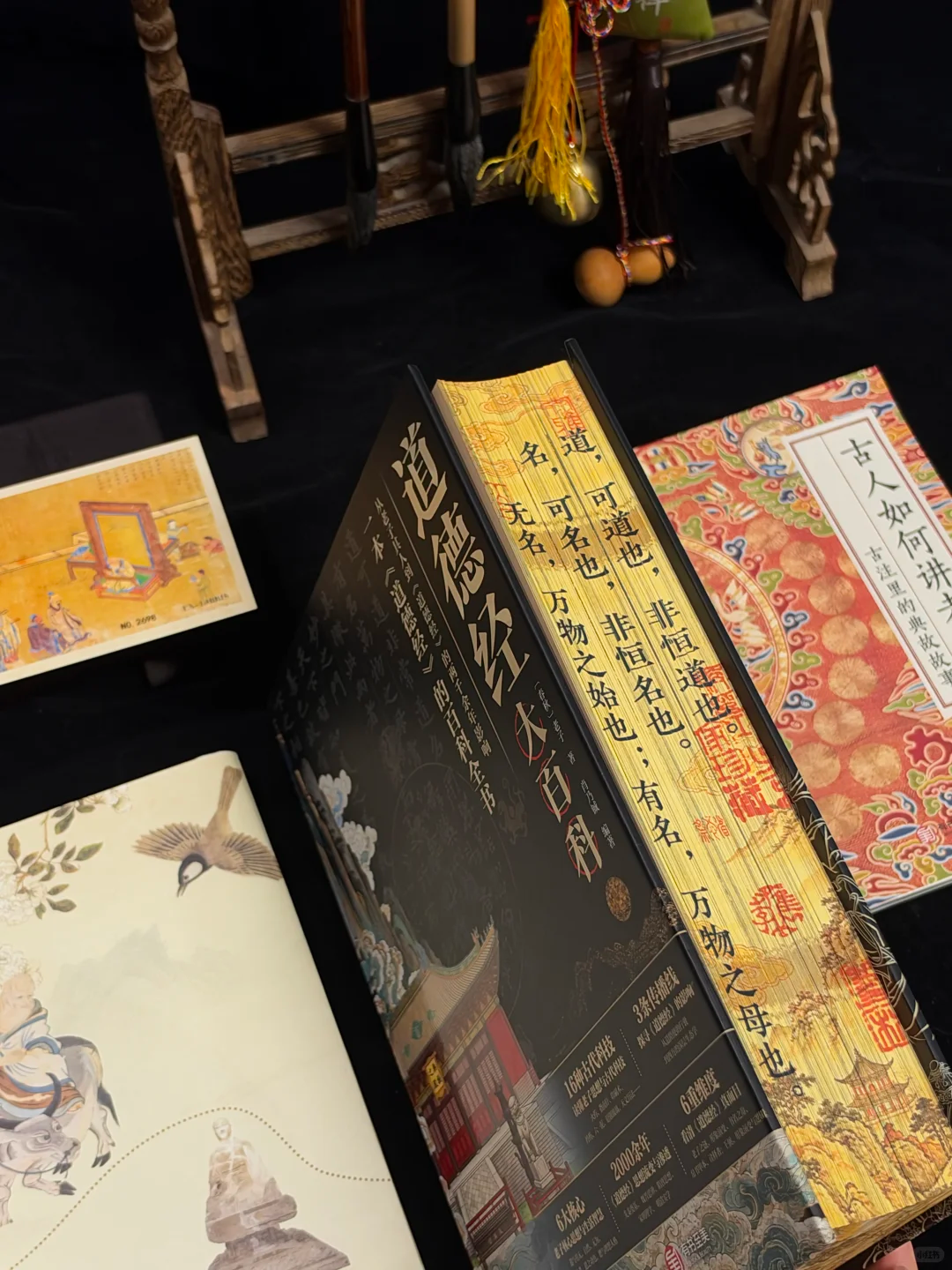

No single translation wins on every count, and these five answer different needs. Stephen Mitchell (1988) and Ursula K. Le Guin (1997) wrote poets' versions from existing translations. Red Pine (1996) and Stephen Addiss with Stanley Lombardo (1993) translated from the Chinese. James Legge (1891) produced a literal Victorian translation that is now in the public domain.
The table below compares all five on the same six points. It compares approach, not the quality of every chapter.
How the comparison works
Each translation is described on six points:
- Source
- Does the translator work from the Chinese, or from other translations and glosses?
- Closeness
- How much does the English add, cut or reorder compared with the Chinese?
- Extras
- Notes, an introduction, the Chinese text, traditional commentary.
- Voice
- What the English sounds like on the page.
- Access
- Whether the text is in copyright or free to read.
- Suits
- The kind of reader who gets most from it.
The points can be checked against the books themselves and against the side-by-side translation reader, which shows the Chinese and Legge for any chapter.

The comparison table
| Translation | Source | Closeness | Extras | Voice | Access | Suits |
|---|---|---|---|---|---|---|
| Stephen Mitchell, Tao Te Ching: A New English Version (Harper & Row, 1988) | Existing translations and a word-by-word gloss; Mitchell does not read Chinese | Loose: adds images, drops repetition, rewrites freely | Brief notes at the back | Fluent, warm, contemporary | In copyright | A first read for pleasure |
| Ursula K. Le Guin with J. P. Seaton, Lao Tzu: Tao Te Ching (Shambhala, 1997) | Paul Carus's 1898 edition with a gloss for each character, checked with Seaton | Interpretive, though more restrained than Mitchell | Her own notes on many chapters | Plain, conversational, sometimes wry | In copyright | Poetry readers who like a companion voice |
| Red Pine (Bill Porter), Lao-tzu's Taoteching (Mercury House, 1996; revised, Copper Canyon Press, 2009) | The Chinese text | Close | Chinese text and selected traditional commentaries for each chapter | Plain and direct | In copyright | Study with the commentary tradition |
| Stephen Addiss and Stanley Lombardo, Tao Te Ching (Hackett, 1993) | The Chinese text | Close in wording, very compressed in form | Introduction by Burton Watson | Spare, short lines, quiet | In copyright | Readers who want the Chinese brevity |
| James Legge, The Tâo Teh King (Clarendon Press, 1891) | The Chinese text and Chinese commentaries | Literal; additions marked with brackets | Long introduction and notes in the original volume | Victorian prose with some rhymed couplets | Public domain, free online | A free, literal reference |
Details are for first editions. Later editions can differ; Red Pine's 2009 edition is a revision of the 1996 book.
Worked example: matching a reader to a translation
Input
A reader has finished Mitchell's version, keeps returning to chapter 8 (on water), and wants to know how close Mitchell is to the Chinese. They have one book budget and are happy to read on screen.
Working through it
- The Source column says Mitchell worked from other translations, so some distance from the Chinese is expected.
- The need is a version from the Chinese with help on hard lines. Red Pine (commentary) and Legge (free) both qualify.
- Check chapter 8 in the reader. The Chinese opens 上善若水, glossed "highest / good / resembles / water". Legge has "The highest excellence is like (that of) water." The image is in the Chinese, so the reader's favourite chapter is on solid ground.

Result
Keep Mitchell for rereading. Spend the book budget on Red Pine for the commentary. Use the Chinese and Legge columns on this site as a free check whenever a single line matters.
Common misconceptions
"The most popular version is the most accurate"
Popularity measures readability. Mitchell's version is widely read, and Mitchell says plainly that he worked from other translations.
"Older means more faithful"
Legge follows the Chinese structure closely, but he brings his own vocabulary. In chapter 4 he translates 帝 as "God": "It might appear to have been before God." 帝 (dì) was the high god of early Chinese religion, and "God" gives it a Christian ring the Chinese doesn't have.
"A translator who can't read Chinese can't be trusted"
Le Guin worked with a sinologist and with a character-by-character edition, and says so. Readers should know which kind of book they are holding; the Source column says which.
This comparison stops at five books. Other respected versions include D. C. Lau (1963), Gia-fu Feng and Jane English (1972), Robert G. Henricks (1989) and Victor H. Mair (1990). The guide to choosing a translation mentions where they fit.
Questions about these translations
Is Stephen Mitchell's Tao Te Ching a real translation?
Mitchell's own subtitle calls it "a new English version". He does not read Chinese and built it from existing translations and a word-by-word gloss, so it is best read as an English rendering of the book. Many readers love it for that reason; check a translation from the Chinese before you rely on a specific line.
Which of these translations includes the Chinese text?
Of the five, Red Pine's edition prints the Chinese text with each chapter. On this site the side-by-side reader shows the Chinese next to Legge's translation for all 81 chapters.
Did Ursula K. Le Guin know Chinese?
No. In her introduction she explains that she worked from Paul Carus's 1898 edition, which prints each Chinese character with an English gloss, and that she checked her versions with J. P. Seaton, a translator of Chinese poetry.
Related pages
Sources
- Stephen Mitchell, Tao Te Ching: A New English Version (New York: Harper & Row, 1988), foreword and notes.
- Ursula K. Le Guin, Lao Tzu: Tao Te Ching: A Book about the Way and the Power of the Way, with J. P. Seaton (Boston: Shambhala, 1997), introduction.
- Red Pine (Bill Porter), Lao-tzu's Taoteching (Mercury House, 1996; revised edition, Copper Canyon Press, 2009).
- Stephen Addiss and Stanley Lombardo, trans., Tao Te Ching, introduction by Burton Watson (Indianapolis: Hackett, 1993).
- James Legge, trans., The Tâo Teh King, Sacred Books of the East, vol. 39 (Oxford: Clarendon Press, 1891), Project Gutenberg eBook #216.
- Chinese text: 道德經, Project Gutenberg eBook #7337.